


Sanctioned — To be sanctioned means to face official penalties or restrictions imposed by a government or international body. Sanctions can freeze assets, ban travel, restrict trade, or prohibit financial transactions with the sanctioned party.
What Does It Mean to Be Sanctioned?
Understanding the sanctioned meaning is critical for anyone doing business internationally or navigating the complex world of financial compliance. When a person, company, or country is sanctioned, it means a government authority or international organization has formally designated that party as a target for economic, financial, or political restrictions. What does sanctioned mean in practical terms? It means frozen assets, severed banking relationships, blocked trade, and severe legal exposure for anyone who continues to deal with the sanctioned party.
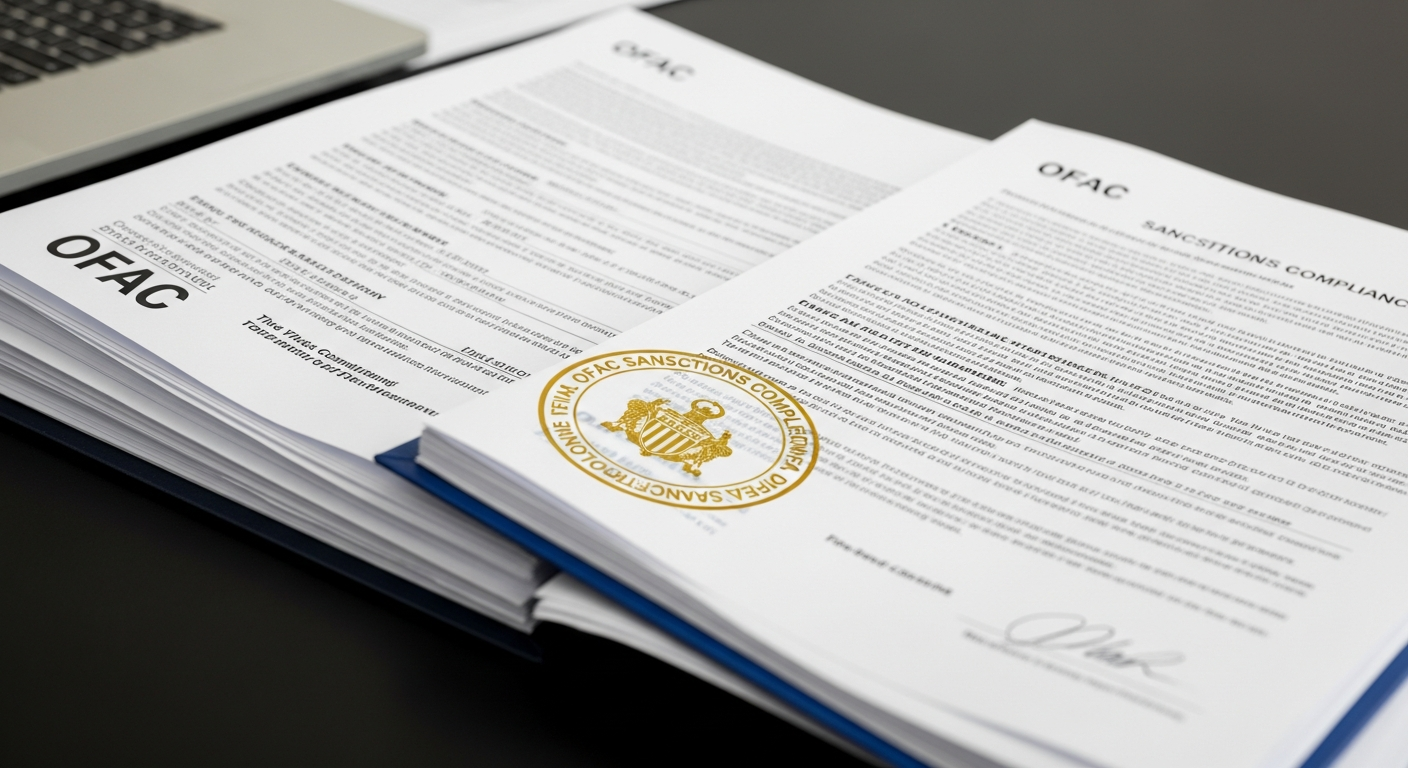
In the United States, the primary authority for imposing economic and trade sanctions is the Office of Foreign Assets Control (OFAC), a division of the U.S. Department of the Treasury. OFAC maintains and enforces comprehensive sanctions programs targeting foreign countries, regimes, terrorist organizations, narcotics traffickers, proliferators of weapons of mass destruction, and other threats to U.S. national security and foreign policy objectives.
The sanction meaning differs slightly depending on whether you’re referring to a court-imposed penalty, an international trade restriction, or an individual OFAC designation — but the core principle remains: being sanctioned imposes significant legal restrictions and creates serious consequences for those who violate them.
Types of Sanctions: OFAC, UN, EU, and UK Frameworks
Sanctions are not a single instrument — they span multiple jurisdictions and frameworks, each with distinct rules, targets, and enforcement mechanisms. Understanding which regime applies to your situation is the first step in any sanctions analysis.
U.S. Sanctions (OFAC)
OFAC administers more than 30 active sanctions programs. Its flagship tool is the Specially Designated Nationals (SDN) List, which currently contains over 12,000 individuals, entities, vessels, and aircraft. Being placed on the SDN list means all property and interests in property within U.S. jurisdiction are immediately blocked, and U.S. persons are prohibited from transacting with the listed party in virtually all circumstances. OFAC also administers sectoral sanctions (such as those targeting Russia’s energy and financial sectors) and secondary sanctions that can reach non-U.S. persons engaging in significant transactions with sanctioned parties.
UN Sanctions
The United Nations Security Council imposes sanctions under Article 41 of the UN Charter. UN sanctions are legally binding on all UN member states and typically target countries or non-state actors posing threats to international peace and security. Current UN sanctions regimes include those against North Korea, Iran, Somalia, Sudan, and the Democratic Republic of Congo, among others. UN sanctions often serve as a baseline that national authorities build upon with more targeted measures.
EU Sanctions
The European Union maintains its own autonomous sanctions regimes, often mirroring UN measures but going further in scope. EU sanctions are implemented through Council Regulations binding on all member states and cover asset freezes, travel bans, arms embargoes, and sectoral restrictions. The EU’s Russia sanctions program, significantly expanded following the 2022 invasion of Ukraine, now includes over 2,000 individuals and 400 entities. Post-Brexit, the UK maintains its own separate sanctions regime through the Office of Financial Sanctions Implementation (OFSI).
| Sanctions Body | Legal Authority | Key Tools | Who Must Comply |
|---|---|---|---|
| OFAC (US) | IEEPA, TWEA, sector-specific statutes | SDN List, sectoral sanctions, country embargoes | All US persons + secondary sanctions reach |
| UN Security Council | UN Charter Chapter VII | Arms embargoes, travel bans, asset freezes | All 193 UN member states |
| EU (Council) | EU Council Regulations | Asset freezes, travel bans, trade restrictions | All EU persons + EU-territory transactions |
| UK (OFSI) | Sanctions & AML Act 2018 | Financial sanctions, trade controls, travel bans | All UK persons + UK-territory transactions |
Individual vs. Entity vs. Country Sanctions: Key Differences
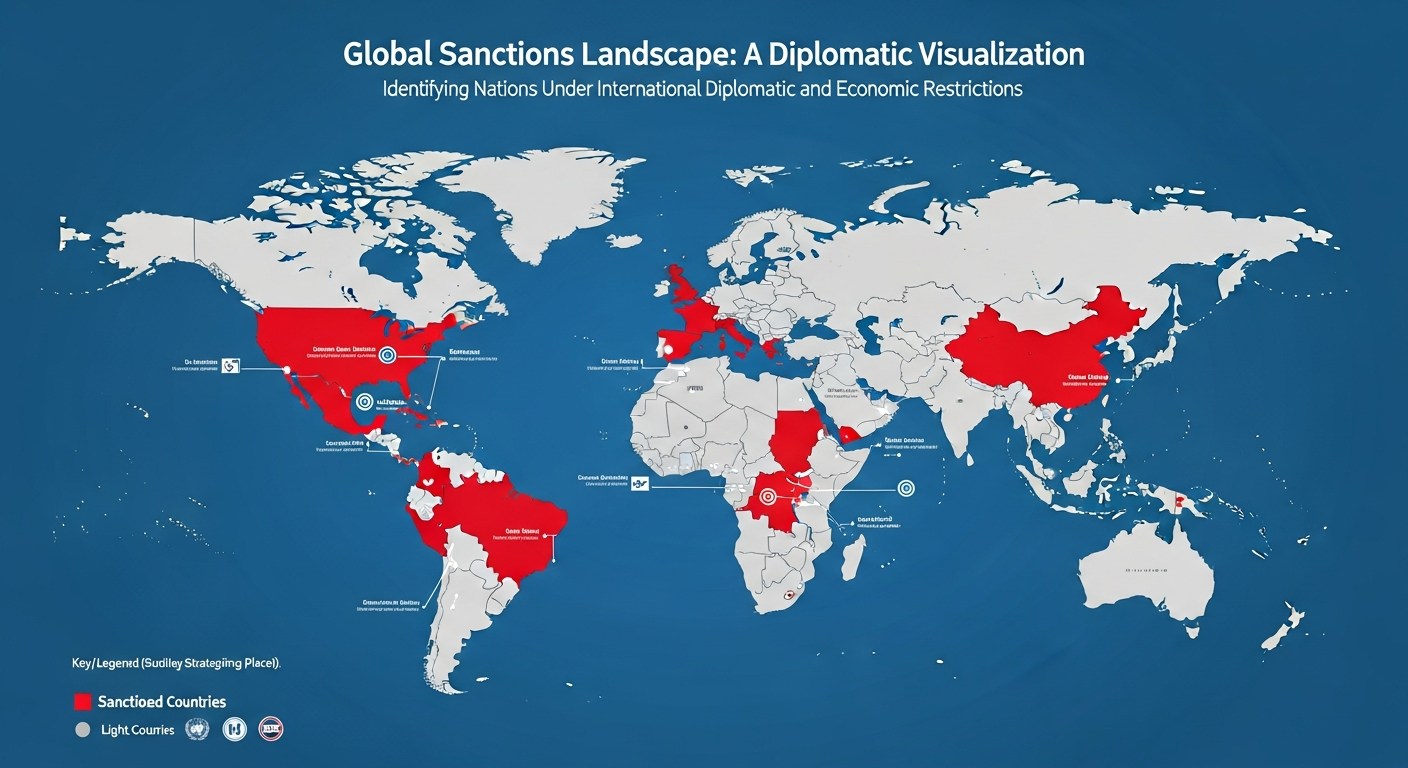
One of the most important distinctions in understanding what does it mean to be sanctioned is recognizing that sanctions operate differently depending on who or what is targeted. The following comparison table outlines the principal differences:
| Category | Individual Sanctions | Entity (Company) Sanctions | Country Sanctions |
|---|---|---|---|
| Who is targeted | Named individuals (executives, politicians, oligarchs, family members) | Corporations, banks, vessels, aircraft, shell companies | Entire countries or specific government agencies |
| Asset freeze | Personal assets, bank accounts, real estate, vehicles | Corporate accounts, receivables, intellectual property | Sovereign assets, central bank reserves, government property |
| Travel restrictions | Entry bans to sanctioning countries | Officers/directors may face personal travel bans | Diplomatic travel restrictions; visa denials to officials |
| Business impact | Cannot transact with U.S. persons; cut off from USD banking | Full commercial isolation; contracts void; supply chains severed | Comprehensive trade embargo; import/export bans |
| 50% Rule applies? | Yes — entities 50%+ owned by sanctioned individual are auto-sanctioned | Yes — subsidiaries and affiliates automatically covered | N/A (country-level programs have own scope rules) |
| Delisting path | OFAC administrative petition; federal court appeal | OFAC petition; compliance overhaul; change of ownership | Political/diplomatic negotiations; regime change |
| Examples | Roman Abramovich, Viktor Vekselberg, Venezuelan officials | Rosneft, Tornado Cash, Huawei (Entity List) | Iran, North Korea, Cuba, Syria, Russia (partial) |
Consequences of Being Sanctioned: What Really Happens
When OFAC places an individual or entity on the SDN List — the most severe form of U.S. designation — the consequences are immediate and sweeping. If you want to understand what does US sanctioned mean in operational terms, here is what happens from the moment the designation is published:
- Immediate asset block: All property and interests in property within U.S. jurisdiction are frozen. This includes bank accounts at U.S. financial institutions, real estate, securities, and receivables.
- USD clearing cut-off: Because virtually all U.S. dollar transactions pass through U.S. correspondent banks, SDN-listed parties are effectively cut off from the global dollar-clearing system — even for transactions that never touch U.S. soil.
- Prohibited transactions: U.S. persons are barred from engaging in any direct or indirect transactions with the designated party, including providing goods, services, technology, or financing.
- Cascading third-party consequences: Non-U.S. companies face severe reputational and legal risk if they continue dealing with an SDN-listed party, particularly given the reach of secondary sanctions.
- Penalties for violators: Companies and individuals who transact with sanctioned parties face civil penalties of up to $356,579 per violation (or twice the transaction value, if greater) and criminal penalties of up to $1 million per violation and 20 years in federal prison.
Being sanctioned does not require a criminal conviction. OFAC designates parties through an administrative process, meaning no court appearance, no trial, and no requirement to prove guilt beyond a reasonable doubt. This makes sanctions both powerful and potentially unjust — which is why working with an OFAC designation lawyer is critical if you or your organization has been targeted.
Recent Examples: Sanctions in 2025–2026
Sanctions activity has accelerated dramatically in recent years. Some of the most significant sanctioned designations in 2025–2026 include:
- Russian oligarchs and entities: OFAC, the EU, and the UK have continued to expand designations targeting individuals and companies helping Russia evade existing sanctions — including third-country intermediaries in Turkey, the UAE, and Central Asia.
- Myanmar military network: Following ongoing human rights abuses, OFAC has continued expanding its Burma sanctions program, targeting military-affiliated businesses and their overseas financial networks.
- Fentanyl trafficking networks: In 2025, OFAC significantly expanded designations under the Fentanyl Sanctions Act, targeting Chinese chemical manufacturers and Mexican cartel-linked entities involved in fentanyl precursor supply chains.
- Cryptocurrency mixers and exchanges: Following the 2022 Tornado Cash designation, OFAC has continued targeting cryptocurrency platforms facilitating sanctions evasion, including several decentralized protocols in 2025.
- Iranian oil and shipping networks: OFAC regularly designates vessels, shipping companies, and intermediaries supporting Iranian oil exports in violation of the Iran sanctions program.
How to Get Off a Sanctions List: The OFAC Delisting Process
If you or your organization has been designated, removal from the SDN List — known as delisting — is legally possible but requires a carefully structured approach. The OFAC SDN list removal process follows these key steps:
- Administrative Reconsideration: Submit a formal petition to OFAC’s Office of Global Targeting demonstrating either that: (a) the factual basis for the designation was incorrect, or (b) the circumstances that led to the designation no longer exist. This requires compelling documentary evidence.
- Gather Supporting Documentation: Collect financial records, corporate ownership documents, business records, legal agreements, and sworn declarations. The stronger and more complete the factual record, the better the chances of success.
- Legal Argument Preparation: A qualified sanctions attorney will prepare a comprehensive legal brief addressing the specific designation criteria OFAC relied upon and demonstrating why they are not met.
- OFAC License as Interim Relief: While delisting is pursued, a specific OFAC license can be sought to authorize specific transactions that would otherwise be prohibited — providing operational relief during the delisting process.
- Federal Court Challenge: If OFAC denies the reconsideration petition, you may challenge the designation in U.S. federal court under the Administrative Procedure Act (APA), arguing the designation was arbitrary, capricious, or contrary to law.
Delisting timelines vary significantly — straightforward cases may resolve in 6–12 months, while complex cases involving criminal investigations or politically sensitive designations can take several years. Early engagement of experienced OFAC legal counsel is essential to maximize the chances of a successful outcome.
Sanctions Compliance: How to Avoid Being Sanctioned
For businesses operating internationally, the question is not just “what does sanctioned mean” — it is “how do we make sure we never end up on that list.” A robust sanctions compliance program includes:
- Counterparty screening: All customers, vendors, partners, and transaction counterparties should be screened against the OFAC SDN List, the EU Consolidated List, the UN consolidated list, and other relevant databases before and during the relationship.
- Ownership analysis: Apply OFAC’s 50 Percent Rule to all counterparties — any entity 50% or more owned by a sanctioned person is automatically blocked, even if not explicitly listed.
- Transaction monitoring: Implement real-time monitoring of financial transactions for sanctions risk indicators, including unusual payment routes, high-risk jurisdictions, and structuring patterns.
- Written compliance policies: Maintain a documented, board-approved sanctions compliance program that is regularly updated to reflect new designations and regulatory guidance.
- Staff training: Train all relevant employees — particularly in compliance, legal, finance, and trade operations — on sanctions red flags and escalation procedures.
- Voluntary self-disclosure: If a potential violation is discovered, timely voluntary self-disclosure to OFAC can significantly reduce penalties — in some cases by 50% or more.

Types of Sanctions Explained
Not all sanctions are the same. Depending on the sanctioning body and the target, sanctions can take several distinct forms, each with different legal implications.
| Sanction Type | What It Restricts | Who Imposes It | Real-World Example |
|---|---|---|---|
| Asset Freeze | Bank accounts, investments, property | OFAC, EU, UN, OFSI | Russian oligarch assets frozen in EU banks |
| Trade Embargo | Import/export of goods and services | OFAC (US Treasury) | US embargo on Cuba since 1962 |
| Travel Ban | Entry into sanctioning country | US, EU, UN member states | Belarusian officials banned from entering EU |
| Arms Embargo | Weapons, military equipment, tech | UN Security Council | UN arms embargo on North Korea |
| Sectoral Sanctions | Specific industries (energy, finance) | OFAC (US) | Russia energy sector debt/equity restrictions |
Financial Sanctions (Asset Freezes)
Financial sanctions block access to bank accounts, investments, and other assets held in or transiting through the sanctioning country’s financial system. A person or entity subject to an asset freeze cannot move, transfer, or access those funds without a specific government license.
Trade Sanctions and Embargoes
Trade sanctions restrict or prohibit the import and export of goods, services, or technology with a sanctioned country or entity. A full trade embargo — such as those applied to Cuba, Iran, and North Korea by the US — bans virtually all commercial transactions.
Travel Bans
Travel bans prohibit sanctioned individuals from entering certain countries. They are commonly imposed alongside asset freezes as part of a coordinated response to human rights violations, terrorism, or corruption.
Arms Embargoes
Arms embargoes restrict the sale, supply, or transfer of weapons and military equipment to a sanctioned country or group. They are frequently imposed by the UN Security Council in conflict zones.
Sectoral Sanctions
Sectoral sanctions target specific industries rather than individuals or entire economies. For example, US sectoral sanctions on Russia restrict dealings in the energy, financial services, and defense sectors without banning all trade.
What Does It Mean to Be Sanctioned by the US Government?
When a person, company, or government is sanctioned by the United States, it typically means the US Treasury’s Office of Foreign Assets Control (OFAC) has placed them on the Specially Designated Nationals (SDN) list or another restricted list. The practical consequences include:
- All assets held in the US or by US persons are frozen
- US individuals and businesses are prohibited from transacting with the sanctioned party
- Financial institutions worldwide must screen against the SDN list or risk secondary sanctions
- Violating OFAC sanctions can result in civil penalties up to $1 million+ per transaction and criminal prosecution
What Does “Sanctioned Oil” Mean?
“Sanctioned oil” refers to crude oil or petroleum products originating from countries under active sanctions regimes — most commonly Russia, Iran, Venezuela, or Syria. Trading in sanctioned oil means purchasing, shipping, insuring, or financing oil that is subject to export restrictions or asset freeze orders. Companies that unknowingly handle sanctioned oil can face severe OFAC penalties. The key risk is not just direct purchase but participation anywhere in the supply chain: shipping, insurance, banking, or refining.
What Does “Government Sanctioned” Mean?
“Government sanctioned” can carry two distinct meanings depending on context. In legal and foreign policy contexts, it means officially penalized or restricted by a government authority. In everyday language, “government sanctioned” can also mean officially approved or authorized by a government — the opposite meaning. When reading about international law or OFAC compliance, always interpret “sanctioned” as restricted or penalized unless the context clearly indicates approval.