


Message a sanctions lawyer on WhatsApp — confidential, reply within 24 hours.
As of 2026, OFAC maintains comprehensive embargoes against 4 countries: Cuba, Iran, North Korea (DPRK), and Syria — plus the occupied Ukrainian regions of Crimea, Donetsk, and Luhansk. An additional 20+ countries face targeted sanctions programs. Civil penalties for violations reach up to $377,700 per violation.
- Comprehensively sanctioned: Cuba · Iran · North Korea · Syria · Crimea/Donetsk/Luhansk
- Heavily targeted: Russia · Belarus · Venezuela · Myanmar · Sudan · Nicaragua
The Office of Foreign Assets Control (OFAC) — a division of the U.S. Department of the Treasury — administers more than 30 active sanctions programs targeting countries, regions, entities, and individuals worldwide. The OFAC sanctioned countries list 2026 falls into two broad categories: comprehensive embargoes that prohibit virtually all transactions, and targeted programs focused on specific individuals, sectors, or types of transactions.
Understanding which countries face OFAC sanctions is essential for businesses engaged in international trade, financial institutions processing cross-border payments, legal and compliance professionals, and any individual with professional or personal ties abroad. Violations — even unintentional ones — can result in civil penalties of up to $377,700 per violation (adjusted annually for inflation) or twice the transaction value, whichever is greater, plus criminal fines up to $1 million and 20 years’ imprisonment.
This guide covers every country on the OFAC list, explains the difference between comprehensive and targeted sanctions, and outlines the key restrictions and authorized exceptions for each. If you need legal assistance with OFAC compliance, licensing, or sanctions removal, our OFAC lawyers are available to help.
Comprehensively Sanctioned vs. Targeted Sanctions — Key Differences
Not all OFAC sanctions are equal. Understanding the distinction is critical for compliance:
| Factor | Comprehensive Embargo | Targeted Sanctions |
|---|---|---|
| Scope | Prohibits virtually ALL transactions with the country | Prohibits transactions only with designated persons/entities or specific sectors |
| Trade | Banned (license required for exceptions) | Generally permitted unless involving SDN-listed parties |
| Financial transactions | Blocked — requires OFAC license | Permitted unless counterparty is on SDN/sectoral list |
| Examples | Cuba, Iran, North Korea, Syria | Russia, Belarus, Venezuela, Myanmar |
| Compliance burden | Extreme — requires specific OFAC license for any engagement | High — requires thorough SDN/SSIL screening before each transaction |
The 4 Comprehensively Sanctioned Countries (2026)
The following countries are subject to total OFAC embargoes. U.S. persons — and in some cases non-U.S. persons — are prohibited from nearly all trade, investment, financial services, and travel-related transactions without a specific OFAC license. Review all active OFAC sanctions programs for the most current information.
Cuba — Cuban Assets Control Regulations (CACR)
The U.S. embargo against Cuba, administered under the Cuban Assets Control Regulations (CACR, 31 CFR Part 515), is one of the longest-standing in history — first imposed in 1963 following the Cuban Revolution. As of 2026, the comprehensive embargo remains in full force. Prohibited activities include:
- Virtually all imports and exports of goods, services, and technology
- Financial transactions and dollar clearing involving Cuban entities
- Tourism and most travel-related expenditures by U.S. persons
- Investment in Cuba and transactions with Cuban government entities
Authorized exceptions: Educational and cultural exchanges, humanitarian remittances (subject to caps), certain food and medicine exports, journalistic activities, and informational materials. Cuba was re-designated as a State Sponsor of Terrorism in January 2021 under the Trump administration.
➡ Learn more: Cuba Sanctions — Full Legal Guide · Cuba Travel Sanctions
Iran — Iranian Transactions and Sanctions Regulations (ITSR)
Iran is subject to the most expansive U.S. sanctions architecture in terms of global reach. The Iranian Transactions and Sanctions Regulations (ITSR, 31 CFR Part 560), rooted in Executive Orders dating to 1979, prohibit virtually all U.S. trade, investment, and financial dealings with Iran. Key restrictions include:
- Complete prohibition on imports and exports of Iranian-origin goods, services, and technology
- Ban on financial transactions with Iranian banks, government, and most private entities
- Extensive secondary sanctions targeting non-U.S. persons who engage in significant transactions with Iran’s oil, petrochemical, banking, shipping, and defense sectors
- Restrictions on U.S. dollar clearing and correspondent banking involving Iran
Why Iran secondary sanctions matter: Unlike most OFAC programs, Iran’s secondary sanctions reach non-U.S. companies. A European or Asian firm with no U.S. operations can face OFAC enforcement — including exclusion from the U.S. financial system — for significant Iran-related trade. Learn more at Iran secondary sanctions explained.
➡ Learn more: Iran Sanctions Lawyer · Iran Sanctions: Wiring Funds
North Korea (DPRK) — North Korea Sanctions Regulations (NKSR)
North Korea is subject to comprehensive OFAC sanctions under the North Korea Sanctions Regulations (NKSR), dramatically expanded through multiple Executive Orders since 2008 and further reinforced by the Countering America’s Adversaries Through Sanctions Act (CAATSA). Virtually all U.S.-person trade, investment, and financial dealings involving North Korea are prohibited. The program specifically targets:
- North Korea’s nuclear, ballistic missile, and WMD programs
- Revenue-generating sectors including coal, iron, seafood, and textiles
- Cryptocurrency transactions and cyber operations facilitating sanctions evasion
- Arms transfers and related materials
In 2025–2026, OFAC has continued to designate individuals and entities facilitating North Korea’s sanctions evasion through cryptocurrency and arms transfers to third parties. North Korea is also subject to extensive UN Security Council measures implemented in parallel by the EU and UK.
Syria — Syrian Sanctions Regulations
Syria has been under comprehensive U.S. sanctions since 2004 under the Syrian Sanctions Regulations, significantly expanded after the 2011 civil war. Sanctions prohibit exports of U.S. goods and services, financial transactions with Syrian entities, and investment in the country.
Critical 2025–2026 update: Following the fall of the Assad regime in December 2024, the U.S. government has taken steps toward easing certain Syria sanctions to support reconstruction and the new governing institutions. In January 2025, OFAC issued General License 24, authorizing certain transactions with new Syrian governing institutions and for reconstruction activities. However, the comprehensive sanctions framework against Syria formally remains in place as of 2026 — companies must carefully assess each transaction under current OFAC guidance before engaging with Syrian counterparties.
➡ Learn more: Syria Sanctions Guide · Syria Sanctions Lawyer
Crimea, Donetsk, and Luhansk Regions (Ukraine)
Since Russia’s 2014 annexation of Crimea, OFAC has imposed comprehensive sanctions on the Crimea region under the Ukraine-/Russia-Related Sanctions Regulations. Following Russia’s 2022 full-scale invasion of Ukraine, the Donetsk and Luhansk “People’s Republics” were added to the comprehensive framework. Prohibited transactions include:
- New investment in these occupied regions
- Import and export of goods, services, or technology to/from these regions
- Any transaction with persons operating in these regions on behalf of Russia
These region-specific prohibitions apply in addition to the broader Russia sanctions program, creating a dual-layer compliance obligation for businesses with any exposure to these territories.
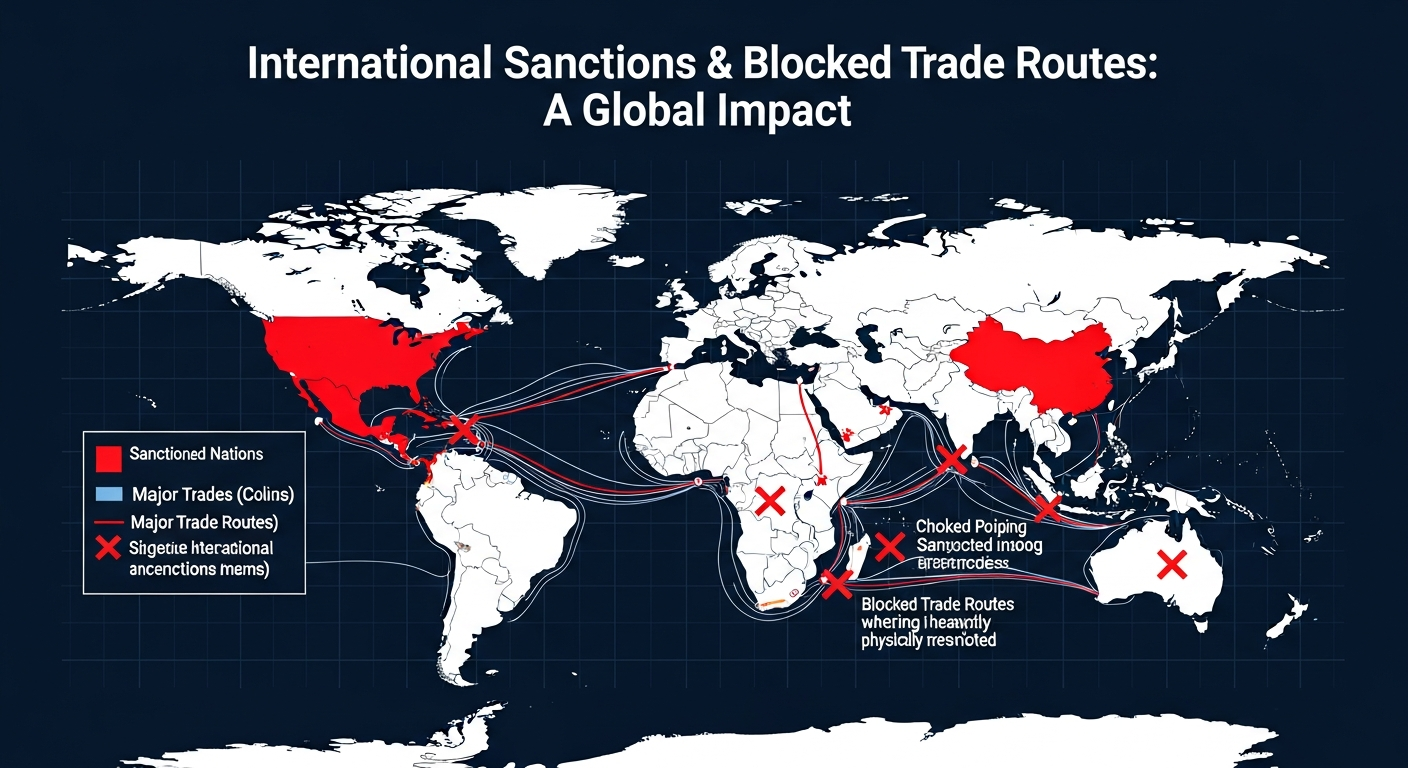
Countries with Targeted OFAC Sanctions Programs — Full 2026 Table
Beyond comprehensive embargoes, OFAC administers targeted sanctions programs for the following countries and regions. General trade and financial transactions may remain permitted unless they involve persons on the SDN List, Sectoral Sanctions Identifications List (SSIL), or other OFAC blocking lists. All businesses with international exposure must screen counterparties before every transaction.
| Country / Region | OFAC Program | Key Restrictions | Authorized Exceptions |
|---|---|---|---|
| 🇷🇺 Russia | Russia Harmful Foreign Activities Sanctions | Finance, energy, defense, technology sectors; oligarchs & state entities; new debt/equity of major banks blocked | Agricultural commodities, medicine, humanitarian aid; specific OFAC general licenses |
| 🇧🇾 Belarus | Belarus Sanctions Regulations | Lukashenko regime officials; financial/energy/potash sectors; SDN-listed entities | Journalistic, diplomatic, humanitarian activities with specific licenses |
| 🇻🇪 Venezuela | Venezuela Sanctions Regulations | Maduro regime; PDVSA (oil); debt financing restrictions; gold sector | Food, medicine, certain oil transactions under General License (periodically revised) |
| 🇲🇲 Myanmar (Burma) | Burma Sanctions Regulations | Military junta (SAC); jade and gems sector; arms-related transactions | Humanitarian aid; certain civil society activities |
| 🇮🇷 Sudan | Sudan Sanctions / Darfur Sanctions | Darfur conflict actors; human rights violators; RSF leadership | Humanitarian food/medicine; UN-authorized activities |
| 🇳🇮 Nicaragua | Nicaragua Sanctions (NICA Act) | Ortega/Murillo regime officials; human rights abusers; security forces | Humanitarian aid; democratic civil society support |
| 🇱🇧 Lebanon / Hizballah | Lebanon / Hizballah Sanctions | Hizballah leadership and financial network; political destabilization actors | General civilian commerce with Lebanon; humanitarian aid |
| 🇾🇪 Yemen / Houthis | Yemen / Houthi Sanctions | Houthi leadership (Ansarallah); arms transfers; destabilizing activities | Humanitarian aid; UN-authorized activities |
| 🇱🇾 Libya | Libya Sanctions | Gaddafi-era remnants; conflict actors; arms embargo violators | Legitimate trade and investment with recognized Libyan government |
| 🇮🇶 Iraq | Iraq Stabilization Sanctions | Former Saddam Hussein regime assets; destabilizing actors | Normal trade and investment with Iraq generally permitted |
| 🇸🇴 Somalia | Somalia Sanctions | Al-Shabaab; piracy facilitators; arms embargo | Humanitarian assistance; UN-authorized activities |
| 🇸🇸 South Sudan | South Sudan Sanctions | Conflict parties; arms embargo violators; human rights abusers | Humanitarian aid; IGAD peace process support |
| 🇨🇫 Central African Republic | CAR Sanctions | Armed groups; human rights violators; arms embargo | Civilian trade; humanitarian activities |
| 🇨🇩 DR Congo | DRC Sanctions (updated March 2026) | Armed groups (M23, etc.); conflict mineral facilitators | Legitimate mining investment; civilian trade |
| 🇪🇹 Ethiopia | Ethiopia Sanctions | Tigray conflict parties; human rights abusers | Humanitarian assistance; general trade |
| 🇲🇱 Mali | Mali Sanctions | Parties undermining peace process; junta leadership | General civilian trade; UN-authorized activities |
| 🇦🇫 Afghanistan | Afghanistan / Taliban Sanctions | Taliban leadership; terrorist financing networks | Humanitarian aid; certain personal remittances (General License 15) |
| 🇨🇳 China (limited) | Non-SDN Chinese Military-Industrial Complex (CMIC) | Securities of CMIC-listed companies; designated defense/surveillance entities | General trade with China broadly permitted; restrictions only on CMIC-listed entities |
Russia and Belarus: 2026 Sanctions Update
Russia and Belarus represent the most dynamically evolving OFAC programs as of 2026:
Russia sanctions — administered under the Russia Harmful Foreign Activities Sanctions framework — were dramatically expanded following the February 2022 invasion of Ukraine. By 2026, the program encompasses:
- Blocking of assets of hundreds of Russian oligarchs, state-owned enterprises, and financial institutions
- Sectoral sanctions on Russia’s financial, energy, defense, and technology sectors (SSIL restrictions)
- Export controls on dual-use technology and advanced semiconductors (coordinated with Commerce BIS)
- Secondary sanction risk for non-U.S. financial institutions conducting significant transactions with Russia’s military-industrial base
Critically, Russia is NOT under a comprehensive embargo — ordinary commercial transactions with non-designated Russian companies remain technically permitted under OFAC rules, though corresponding export controls and banking restrictions may effectively prohibit them in practice. See our Russia sanctions overview and Russia Sanctions Lawyer page for compliance guidance.
Belarus sanctions were significantly updated in August 2024, expanding restrictions on the financial and energy sectors tied to Belarus’s support for Russia’s military operations. The Belarus program targets Lukashenko regime officials and their business networks, with designations updated periodically. Belarus remains a targeted (not comprehensive) sanctions jurisdiction. See our Belarus sanctions guide and Belarus Sanctions Lawyer page.
What Happens If You Do Business with OFAC Sanctioned Countries?
OFAC enforces its regulations through both civil and criminal actions. The consequences of violations can be severe, even for unintentional infractions:
- Civil penalties: Up to $377,700 per violation (the statutory maximum is adjusted for inflation) or twice the transaction value, whichever is greater. OFAC has assessed multi-million dollar penalties against banks, insurers, tech companies, and small businesses alike.
- Criminal penalties: For willful violations — up to $1,000,000 in fines and/or 20 years’ imprisonment (individuals); up to $5,000,000 for corporate criminal violations.
- Asset blocking: Any property or funds involved in a sanctions violation may be frozen immediately.
- Reputational damage: OFAC enforcement actions are published publicly, creating long-term reputational harm for businesses.
- De-banking risk: Financial institutions found to have processed prohibited transactions face heightened regulatory scrutiny and potential loss of U.S. dollar clearing access.
OFAC’s penalty calculator can help you estimate potential exposure. If you believe you may have committed a sanctions violation, a voluntary self-disclosure to OFAC — properly prepared with legal counsel — can reduce penalties by up to 50%.
How to Check If a Country, Company, or Individual Is OFAC Sanctioned
OFAC maintains several publicly accessible screening tools:
- SDN List: The Specially Designated Nationals and Blocked Persons List — over 12,000 entries as of 2026. Updated frequently, including April 23, 2026. Check it at our SDN list guide or directly via the OFAC website.
- Consolidated Sanctions List: Combines SDN, SSIL, and other OFAC lists into a single searchable database.
- OFAC Sanctions Search Tool: Free tool at sanctionssearch.ofac.treas.gov — required screening for U.S. persons before any international transaction.
For businesses with significant international transaction volume, automated OFAC screening solutions integrate with ERP and payment systems to flag matches in real time.
What Is the OFAC Sanctions List? (SDN and Consolidated Lists)
OFAC maintains several sanctions lists. The most important is the Specially Designated Nationals (SDN) List — a roster of individuals, companies, and organizations whose assets are blocked and with whom US persons are generally prohibited from dealing. OFAC also maintains a Consolidated Sanctions List combining all its non-SDN lists. Businesses operating internationally must screen counterparties against both lists.
OFAC Sanctioned Countries: Full List (2025 Updated)
OFAC currently administers comprehensive sanctions programs — effectively full trade embargoes — against the following countries:
| Country | Sanctions Program | Key Restrictions |
|---|---|---|
| Cuba | Cuban Assets Control Regulations | Comprehensive embargo; limited exceptions for travel, remittances |
| Iran | Iranian Transactions and Sanctions Regulations | Near-total trade ban; secondary sanctions on third-country entities |
| North Korea | North Korea Sanctions Regulations | Comprehensive embargo; strict enforcement on arms and technology |
| Syria | Syrian Sanctions Regulations | Broad trade and financial restrictions; humanitarian exceptions exist |
| Russia | Russia/Ukraine-related Sanctions | Sectoral + individual designations; energy, finance, defense sectors |
| Venezuela | Venezuela Sanctions Regulations | Targeted sanctions on government officials and oil sector restrictions |
| Belarus | Belarus Sanctions Regulations | Targeted sanctions on officials; sectoral restrictions |
OFAC Restricted Countries vs. Comprehensively Sanctioned Countries
There is an important distinction between comprehensively sanctioned countries (where virtually all trade is banned) and countries subject to targeted or sectoral sanctions (where restrictions apply only to specific individuals, entities, or industries). Cuba, Iran, North Korea, and Syria face comprehensive embargoes. Russia, Venezuela, Belarus, and others face targeted measures that are serious but do not constitute total trade bans. Always check OFAC’s current program pages for the latest status, as sanctions change frequently.
Embargoed Countries: What the Term Means
An embargo is the most restrictive form of US sanctions — a comprehensive ban on trade, financial transactions, and travel-related services with an entire country. “Embargoed country” and “comprehensively sanctioned country” are often used interchangeably. Currently, the US maintains embargoes against Cuba, Iran, North Korea, and Syria. Dealing with these countries without an OFAC license is illegal for US persons and companies worldwide.
What Countries Have Sanctions Against the United States?
Several countries have imposed retaliatory or independent sanctions against the United States or US persons in recent years. Russia has designated a list of “unfriendly states” and blocked certain US entities from operating within its borders. China has imposed sanctions on US officials and organizations in response to actions over Taiwan, Hong Kong, and Xinjiang. Iran prohibits dealings with numerous US government entities and individuals. These reverse-sanctions regimes primarily affect US government officials, think tanks, and organizations rather than private businesses.
Message a sanctions lawyer on WhatsApp — confidential, reply within 24 hours.