


Message a sanctions lawyer on WhatsApp — confidential, reply within 24 hours.
OFAC Sanctioned Countries List 2026: Complete Guide to All Sanctioned Nations
The OFAC sanctioned countries fall into two tiers: comprehensive embargoes covering Cuba, Iran, North Korea, and Syria — where virtually all transactions are prohibited — and targeted/sectoral programs covering Russia, Venezuela, Belarus, Myanmar, and 20+ other jurisdictions where specific entities, sectors, or activities are restricted.
Understanding exactly which countries are sanctioned, what those sanctions prohibit, and how they affect your business is essential for anyone engaged in cross-border trade, investment, or financial services. This guide covers every active OFAC country sanctions program as of 2026, including recent changes under the Trump administration. For personalized guidance, consult our sanctions lawyers with experience across 40+ jurisdictions.
Comprehensive vs. Targeted Sanctions: What’s the Difference?
OFAC administers two fundamentally different categories of country-based sanctions. Grasping this distinction is the foundation of any OFAC compliance program.
Comprehensive embargoes are broad prohibitions covering virtually all trade, financial transactions, and dealings involving a target country. U.S. persons cannot import or export goods, provide services, engage in financial transactions, or conduct business with entities in a comprehensively sanctioned country without an OFAC-specific license. The list of comprehensively sanctioned countries has remained stable for years: Cuba, Iran, North Korea, and Syria — plus the Russian-controlled Ukrainian regions of Crimea, Donetsk, and Luhansk.
Targeted and sectoral sanctions are more surgical. Rather than prohibiting all commerce with a country, they block specific individuals, entities, sectors (such as energy or finance), or types of transactions. Russia, Venezuela, Belarus, Myanmar, and many others fall into this category. Transactions with non-designated parties in these countries may still be lawful — but require careful screening and due diligence.
| Country | Sanctions Type | Primary Regulation | Key Restriction |
|---|---|---|---|
| Iran | Comprehensive | ITSR (31 C.F.R. Part 560) | All trade, finance, technology |
| Cuba | Comprehensive | CACR (31 C.F.R. Part 515) | All trade (embargo since 1963) |
| North Korea | Comprehensive | NKSR (31 C.F.R. Part 510) | All transactions |
| Syria | Comprehensive | SSR (31 C.F.R. Part 542) | All trade and investment |
| Crimea/Donetsk/Luhansk | Comprehensive (regional) | Ukraine-/Russia-Related | All new investment and trade |
| Russia | Broad targeted | EO 14024+ | Energy, finance, defense, oligarchs |
| Venezuela | Targeted | EO 13884 | PDVSA, government officials |
| Belarus | Targeted | EO 13405 | State enterprises, Lukashenko regime |
| Myanmar | Targeted | EO 14014 | Military, human rights violators |
| Nicaragua | Targeted | NICA Act + EOs | Ortega regime officials |
Comprehensively Sanctioned Countries (2026)
Iran — Iranian Transactions and Sanctions Regulations (ITSR)
Iran is subject to the most extensive U.S. sanctions program in the world. The Iranian Transactions and Sanctions Regulations (ITSR, 31 C.F.R. Part 560) prohibit virtually all transactions involving Iran, Iranian nationals, and Iranian-origin goods. U.S. persons may not import or export goods, technology, or services to or from Iran, engage in financial transactions, or provide material support to Iran or its government without a specific OFAC license.
Secondary sanctions extend Iran’s reach globally: non-U.S. companies that engage in significant transactions with Iran’s energy sector, financial institutions, or designated entities risk being cut off from the U.S. financial system. An Iran sanctions lawyer can help non-U.S. businesses assess their secondary sanctions exposure and structure compliant operations.
The Iran sanctions landscape is dynamic. Since 2018, the U.S. has maintained a “maximum pressure” posture. In 2025-2026, OFAC continued active enforcement of Iran sanctions, including a February 2026 settlement of $3.777 million related to Iranian sanctions violations, demonstrating that enforcement remains vigorous regardless of diplomatic developments.
Cuba — Cuban Assets Control Regulations (CACR)
Cuba has been subject to a comprehensive U.S. trade embargo since 1963. The Cuban Assets Control Regulations (CACR, 31 C.F.R. Part 515) prohibit all unlicensed transactions involving Cuba, Cuban nationals (including Cuban-origin individuals living in third countries), and Cuban property. The embargo is reinforced by the Helms-Burton Act (LIBERTAD Act), which provides additional restrictions on trade with Cuba and imposes liability on foreign companies that “traffic” in confiscated Cuban property.
Unlike Iran, Cuba has a robust general license framework permitting travel-related transactions, remittances, and certain telecommunications activities. However, the scope of permitted activities has shifted significantly under successive administrations. Cuba sanctions require careful case-by-case analysis — what was permitted under Obama-era general licenses may not be permitted today.
North Korea — North Korea Sanctions Regulations (NKSR)
The Democratic People’s Republic of Korea (DPRK) faces some of the most severe sanctions of any country. The North Korea Sanctions Regulations (NKSR, 31 C.F.R. Part 510), reinforced by multiple executive orders (EO 13551, 13687, 13722, 13810), prohibit all trade, investment, and financial transactions involving North Korea. OFAC has also designated the entire North Korean government, the Korean Workers’ Party, and the Korean People’s Army — meaning any transaction with these entities is automatically blocked.
North Korea sanctions extend to digital assets: OFAC has designated multiple North Korean hacking groups (Lazarus Group, Bluenoroff) for state-sponsored cryptocurrency theft and has sanctioned crypto mixing services used to launder stolen funds. Any engagement with North Korean cyber actors through crypto transactions triggers OFAC liability.
Syria — Syrian Sanctions Regulations (SSR)
Syria has been subject to broad U.S. sanctions since 2004, significantly expanded following the civil war. The Syrian Sanctions Regulations (SSR, 31 C.F.R. Part 542) prohibit virtually all transactions with Syria, including exports of goods, technology, and services; new investment; and financial transactions involving the Syrian government.
A significant development in late 2024 and 2025 was the collapse of the Assad regime following rebel advances. The Trump administration indicated in early 2025 that it was reviewing Syria sanctions policy, with some signals of potential temporary relief to enable reconstruction. However, as of early 2026, comprehensive Syria sanctions remain in place. Businesses should consult OFAC license options for any proposed Syria-related activity.
Crimea, Donetsk, and Luhansk (Ukraine Regions)
Since Russia’s 2014 annexation of Crimea, OFAC has maintained comprehensive sanctions prohibiting new investment in and the importation of goods from Crimea. Following Russia’s 2022 full-scale invasion of Ukraine and the purported annexation of Donetsk, Luhansk, Zaporizhzhia, and Kherson regions, OFAC extended comprehensive restrictions to Donetsk and Luhansk as well. These regional restrictions exist within the broader Russia sanctions framework but operate as near-comprehensive prohibitions for the affected areas.
Broad Targeted Sanctions: Russia
Russia is subject to some of the most extensive targeted sanctions ever imposed by the United States — but it is NOT comprehensively sanctioned at the country level (with the exception of the Donetsk and Luhansk regions). The Russia Harmful Foreign Activities Sanctions program, anchored by Executive Order 14024 (April 2021) and expanded by dozens of subsequent orders and determinations, targets:
- Major Russian financial institutions (Sberbank, VTB, Gazprombank, and many others)
- The Russian energy sector, including restrictions on oil price caps under the G7 framework
- Defense and military-industrial complex entities
- Russian oligarchs and their family members, yachts, aircraft, and real estate
- Technology transfers that support Russia’s military capabilities
- Belarus-connected entities facilitating Russian sanctions evasion
Working with a Russia sanctions lawyer is essential for any business with Russian counterparties, investments in Russia, or supply chains touching Russian-origin goods. The complexity and pace of Russia sanctions changes — hundreds of designations since February 2022 — make self-navigation extremely risky.
Other Major Targeted Sanctions Programs (2026)
Venezuela
Venezuela faces targeted U.S. sanctions under Executive Order 13884 (August 2019), which broadly prohibits transactions with the Venezuelan government. PDVSA, Venezuela’s state oil company, has been designated as a Specially Designated National. The sanctions landscape for Venezuela is complex: OFAC has periodically issued general licenses permitting limited oil sector activity — notably in 2023-2024 — and then revoked them, depending on political developments. As of 2026, Venezuela sanctions remain active with continuing SDN designations of regime officials.
Belarus
Belarus sanctions under Executive Order 13405 and subsequent orders target the Lukashenko regime following disputed elections and human rights abuses. OFAC has designated major Belarusian state-owned enterprises including Belaruskali (potash), Beltelecom, and the national airline Belavia, in addition to hundreds of senior officials. Belarus sanctions also intersect with EU and UK sanctions programs, creating compliance complexity for multinational businesses.
Myanmar (Burma)
Following the February 2021 military coup, OFAC expanded sanctions against Myanmar under Executive Order 14014. Designations target the military junta (State Administration Council), senior generals, military-owned conglomerates (Myanmar Economic Holdings Limited, Myanmar Economic Corporation), and the oil and gas sector. Non-designated trade with Myanmar is still possible in most sectors, but supply chain due diligence is essential.
Other Active OFAC Country/Thematic Programs
OFAC maintains more than 30 active sanctions programs. Other notable programs include: Sudan (financial sector, armed groups), Somalia (Al-Shabaab, arms embargo), South Sudan (armed groups, conflict parties), Yemen (Houthis designated as SDNs), Nicaragua (Ortega regime under NICA Act), Zimbabwe, Democratic Republic of Congo, and Central African Republic. Additionally, thematic programs target global terrorism (SDGT), narcotics trafficking (SDNTK), weapons proliferation, cybercrime, and transnational organized crime — applicable to individuals and entities worldwide regardless of nationality.
The SDN list covers entities across all these programs and currently includes over 12,000 designated individuals, companies, vessels, and aircraft. Businesses must screen against this list — and all other OFAC lists — before every transaction.
How OFAC Country Sanctions Affect Businesses
Country sanctions affect businesses at multiple levels, depending on their nexus to the U.S. financial system and the nature of their operations:
- U.S. companies and subsidiaries: Must comply with all OFAC programs globally. Any transaction involving a sanctioned country or SDN-listed entity is presumptively prohibited without a license.
- Non-U.S. companies: Exposed through U.S. dollar clearing (virtually all USD transactions pass through U.S. correspondent banks), use of U.S.-origin goods or technology, and secondary sanctions programs targeting Iran, Russia, and North Korea.
- Financial institutions: Banks face the highest scrutiny — required to screen all transactions, block payments to/from sanctioned countries, and file blocked asset reports with OFAC.
- Exporters and importers: Must classify goods, screen end-users, and ensure no export control or sanctions restrictions apply to the transaction.
- Investors and fund managers: Must screen portfolio companies and avoid investments in designated entities or sanctioned-country assets.
The impact of economic sanctions goes beyond legal prohibition. Even where transactions are technically permitted, correspondent banks often apply de-risking policies that make it practically impossible to process payments to or from high-risk jurisdictions. This is particularly acute for FATF grey-listed countries, which overlap significantly with OFAC-targeted jurisdictions.
Secondary Sanctions: The Extraterritorial Reach of OFAC
One of the most significant — and controversial — aspects of U.S. sanctions is their extraterritorial reach through secondary sanctions. Unlike primary sanctions (which apply to U.S. persons and companies), secondary sanctions target non-U.S. parties that engage in significant transactions with sanctioned countries or entities.
The Iran secondary sanctions framework — codified in the Iran Freedom and Counter-Proliferation Act (IFCA) and the Comprehensive Iran Sanctions, Accountability, and Divestment Act (CISADA) — penalizes non-U.S. banks and companies that conduct significant transactions with Iran’s energy, financial, or defense sectors. Similarly, Russia’s Countering America’s Adversaries Through Sanctions Act (CAATSA) authorizes secondary sanctions against non-U.S. parties making significant investments in Russia’s defense, intelligence, or energy sectors.
An experienced secondary sanctions attorney can help non-U.S. businesses map their exposure and implement compliance measures before a transaction — not after. Retroactive disclosure is far more costly than proactive compliance planning.
Recent OFAC Developments: 2025–2026
The Trump administration, which took office in January 2025, brought significant changes to U.S. sanctions policy. Key developments include:
- Syria policy review: Following the fall of the Assad regime in late 2024, the Trump administration initiated a review of Syria sanctions with potential temporary relief measures to enable reconstruction. While formal changes as of early 2026 remained limited, businesses should monitor OFAC guidance closely.
- Russia enforcement posture: OFAC enforcement of Russia sanctions remained active through mid-2025, though the pace of new designations moderated as the Trump administration pursued diplomatic engagement. The Russia sanctions framework under EO 14024 remains fully in force.
- Venezuela oil licensing: The general license permitting Chevron and other oil companies to operate in Venezuela was subject to ongoing review and modification. As of 2026, licensed operations continue under specific conditions.
- Continued active enforcement: A February 2026 OFAC settlement for $3.777 million related to Iranian sanctions violations confirmed that OFAC enforcement continues vigorously under the new administration.
- Cuba policy: The Trump administration maintained a hardline Cuba policy, with no relaxation of the CACR embargo and continued implementation of Helms-Burton Act Title III.
For the most current information on OFAC sanctions changes, consult our OFAC attorneys or check OFAC’s official website at sanctions.ofac.treas.gov. Sanctions regulations change frequently, and acting on outdated information can create significant legal exposure.
How to Check If a Country or Entity Is Sanctioned
Checking whether a specific country, company, or individual is subject to OFAC sanctions requires more than a simple search. The process involves:
- SDN List search: Use OFAC’s Sanctions List Search at sanctions.ofac.treas.gov to screen parties against the SDN list and all other OFAC lists (Consolidated Sanctions List).
- Program review: Even if a party doesn’t appear on the SDN list, transactions involving comprehensively sanctioned countries (Cuba, Iran, North Korea, Syria) are prohibited by program regulations — not just list entries.
- Beneficial ownership screening: The 50% rule means that entities owned 50% or more (individually or collectively) by SDN-listed parties are also blocked — even if they don’t appear on the list themselves.
- Vessel and aircraft screening: OFAC publishes separate lists of sanctioned ships and aircraft that must be screened in trade finance and maritime transactions.
Professional OFAC screening services provide automated, real-time screening against all OFAC lists with fuzzy matching for name variations and aliases. For complex transactions or counterparties in high-risk jurisdictions, manual legal review is also recommended.
Obtaining an OFAC License for Sanctioned Country Transactions
OFAC issues both general licenses (automatically applicable, no application required) and specific licenses (individually issued after application review) that authorize otherwise-prohibited transactions. For comprehensively sanctioned countries, common license categories include:
- Humanitarian trade (food, medicine, medical devices)
- Legal services and representation
- Journalistic and diplomatic activity
- Personal remittances and travel
- Emergency medical services
- Export of information and informational materials
Specific license applications are filed through OFAC’s SNAP-R system and typically take 3-6 months to process. Our sanctions lawyer team prepares and files OFAC license applications on behalf of clients worldwide, ensuring applications are complete, properly documented, and strategically framed to maximize approval prospects.
Consequences of Violating OFAC Country Sanctions
Violating OFAC country sanctions — even unintentionally — triggers serious consequences. OFAC violations are strict liability: the agency does not need to prove intent to assess civil penalties. The maximum civil penalty is the greater of $1,330,783 per violation or twice the value of the underlying transaction. Criminal penalties under IEEPA can reach $1 million per violation plus 20 years imprisonment for willful violations.
When a violation is discovered, acting quickly is critical. Voluntary self-disclosure to OFAC before the agency initiates an investigation can reduce civil penalties by up to 50%. Our OFAC attorney team handles enforcement defense, self-disclosure filings, and penalty negotiations for clients worldwide. If your assets have been frozen as a result of OFAC action, we also handle blocked assets release proceedings.
If you have conducted transactions with a sanctioned country and are uncertain of your exposure, contact our OFAC legal counsel for a confidential case assessment. We represent clients in 40+ countries entirely remotely.
Comprehensively Sanctioned vs. Targeted Sanctions: Key Differences
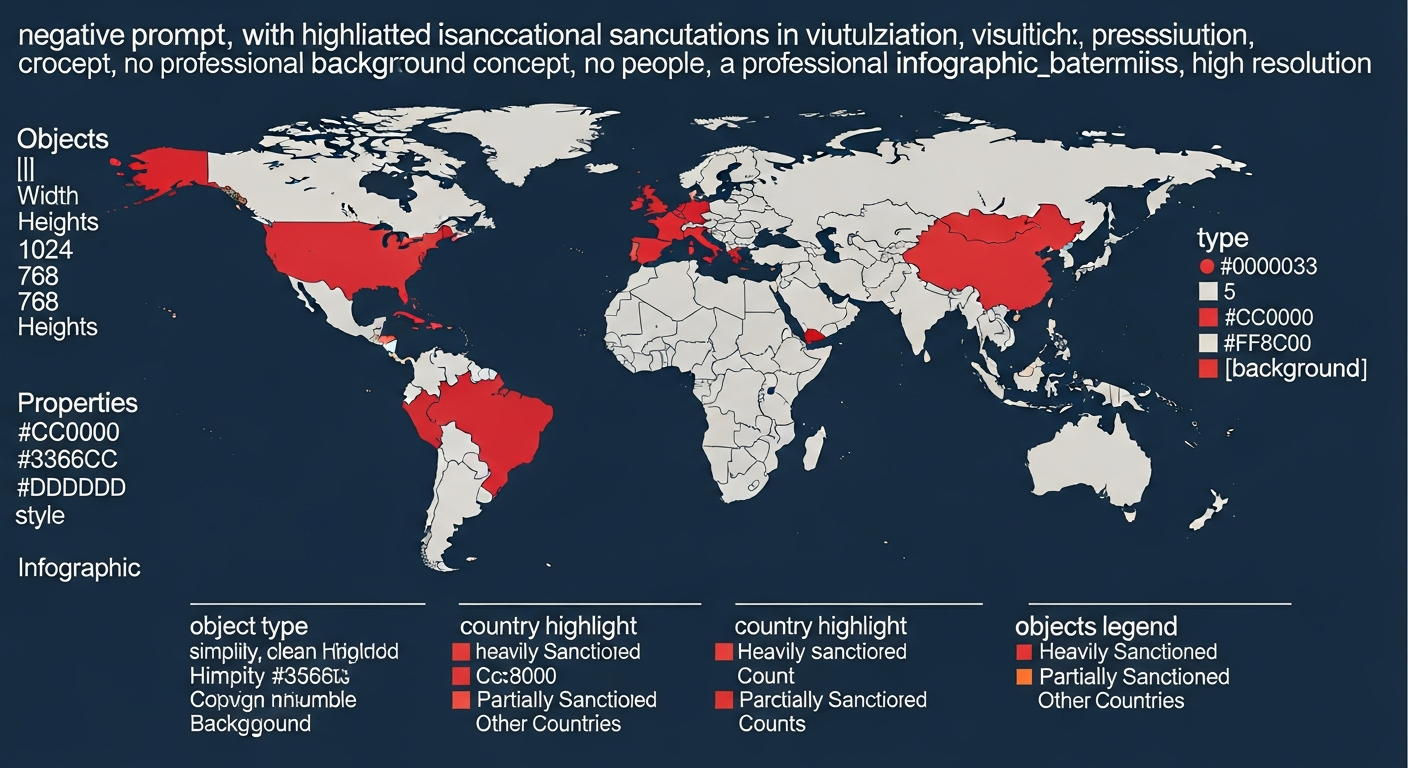
Understanding whether a country faces comprehensive or targeted OFAC sanctions is critical for compliance decisions. Comprehensive sanctions prohibit virtually all transactions, while targeted sanctions restrict specific sectors, individuals, or entity types. The table below summarizes the key distinctions across major sanctioned jurisdictions in 2026.
| Country / Program | Sanction Type | What’s Prohibited | Key OFAC Program Name |
|---|---|---|---|
| Iran | Comprehensive | All imports, exports, trade, financial transactions, investment; U.S. persons may not engage in virtually any transaction. Secondary sanctions on non-U.S. parties for significant dealings. | Iranian Transactions and Sanctions Regulations (ITSR) — 31 C.F.R. Part 560 |
| Cuba | Comprehensive | All trade, investment, financial dealings; imports of Cuban-origin goods; U.S. person travel without authorization; Cuban government property transactions. | Cuban Assets Control Regulations (CACR) — 31 C.F.R. Part 515 |
| North Korea | Comprehensive | All imports/exports (goods, services, technology), financial transactions, new investment; transfers to/from North Korea; arms and luxury goods. | North Korea Sanctions Regulations (NKSR) — 31 C.F.R. Part 510 |
| Syria | Comprehensive | All exports/imports of goods, services, technology; new investment; facilitation of third-party transactions; petroleum products. | Syrian Sanctions Regulations (SSR) — 31 C.F.R. Part 542 |
| Russia | Targeted (Extensive) | Specific sectors: energy, finance, defense, aerospace, technology; new debt/equity for major banks; designated oligarchs, officials and entities; imports of Russian crude oil (EO 14066). Non-designated Russian parties may be transacted with subject to compliance. | Russian Harmful Foreign Activities Sanctions Regulations — 31 C.F.R. Part 587 |
| China (Targeted Sectors) | Targeted (Sectoral) | Technology exports (semiconductors, AI chips); designated entities on Entity List; military-civil fusion companies; Xinjiang supply chain prohibitions under UFLPA. No country-wide prohibition. | Non-SDN Chinese Military-Industrial Complex Companies (CMIC) List; EAR Entity List |
| Venezuela | Targeted | PDVSA and state oil sector; Venezuelan government officials and their property; new debt/equity in government entities; gold sector transactions. | Venezuela Sanctions Regulations — 31 C.F.R. Part 591 |
For comprehensive sanctions programs, any transaction requires a specific or general OFAC license. For targeted programs, transactions with non-designated parties in unrestricted sectors may proceed with appropriate due diligence. Our sanctions lawyers can advise on the specific restrictions applicable to your proposed transaction.
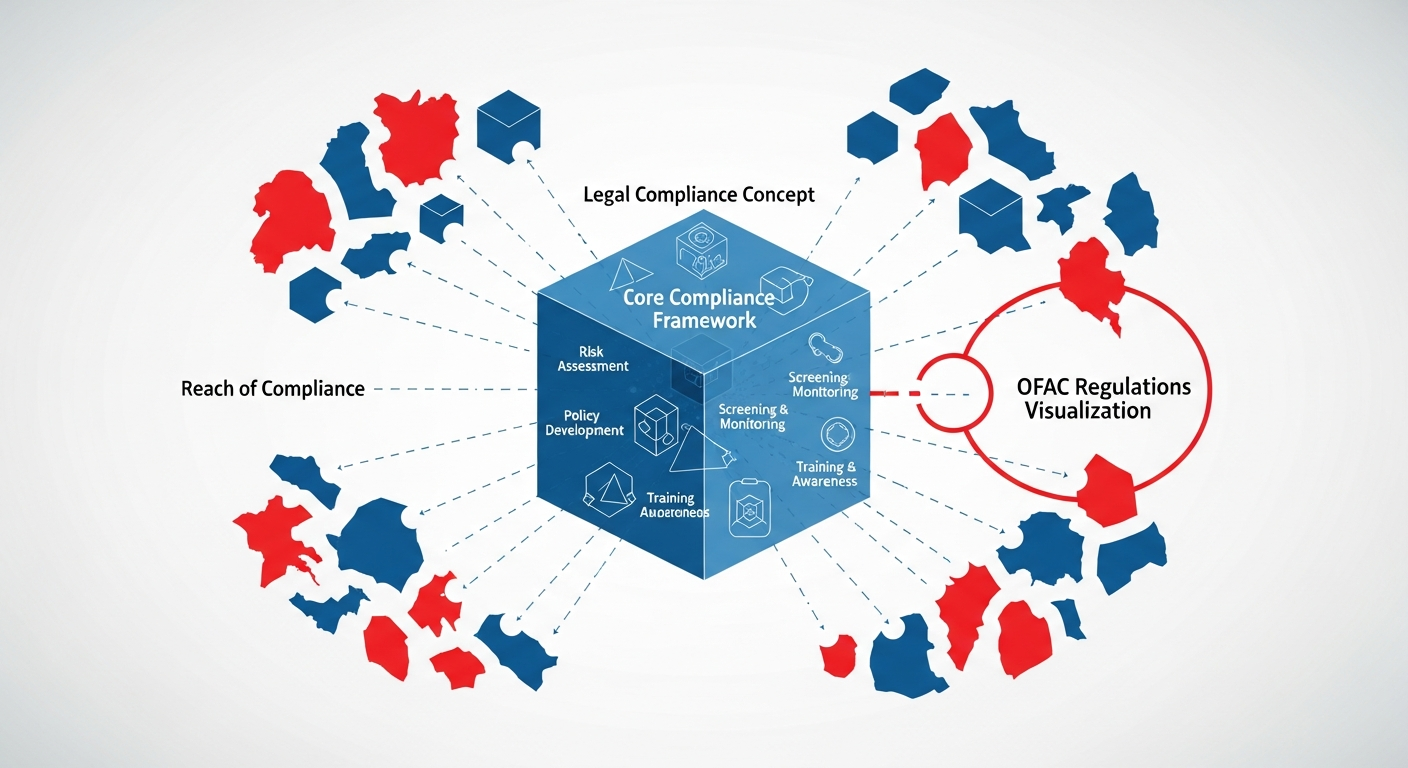
Recent OFAC Sanctions Changes 2025-2026
OFAC regularly updates its sanctions programs through new designations, program modifications, and general license issuances. The following table highlights significant sanctions changes from 2025 through 2026 that affect compliance strategies for businesses and individuals transacting internationally.
| Date | Country / Entity / Program | Change | Compliance Impact |
|---|---|---|---|
| January 2025 | Russia (Harmful Activities) | OFAC updated the Russia Harmful Foreign Activities Sanctions Regulations; additional SDN designations targeting Russian financial intermediaries and energy sector entities facilitating sanctions evasion. | Increased due diligence required for any Russian counterparty; banks must re-screen existing customers against updated SDN list. |
| January 2025 | North Korea | Updated North Korea Sanctions Regulations designations targeting IT workers operating abroad and cryptocurrency laundering networks used to fund WMD programs. | Crypto exchanges, IT contractors, and remote-work platforms face heightened screening obligations for DPRK-linked activity. |
| January 2025 | Belarus | Additional designations under the Belarus Sanctions program targeting officials and entities connected to Lukashenko regime repression and Russia-facilitation activities. | EU/US persons must verify counterparty status; financial institutions should re-screen Belarusian correspondent relationships. |
| February 2025 | Iran | OFAC issued updated Iran sanctions guidance and new SDN designations targeting Iranian petroleum smuggling networks and front companies in third countries facilitating sanctions evasion. | Commodity traders, shipping companies, and financial institutions must enhance screening of Iran-linked petroleum transactions. |
| March 2026 | Democratic Republic of Congo (DRC) | OFAC updated DRC-related sanctions designations targeting armed groups (including M23 and supporting entities) and conflict mineral networks. Expanded designations under the Global Magnitsky program. | Mining companies, mineral traders, and supply chain participants sourcing from eastern DRC must conduct enhanced due diligence. |
| April 2026 | Counter-Narcotics Trafficking (Cross-Cutting) | OFAC issued new designations under the Narcotics Trafficking Sanctions Regulations (NTSR) targeting transnational drug networks with links to multiple jurisdictions including Venezuela, Mexico, and Central America. | Financial institutions, real estate operators, and businesses in affected jurisdictions must screen against updated SDN list entries. |
| Ongoing 2025-2026 | Russia / Ukraine Regions (Crimea, Donetsk, Luhansk) | Continuous designation of Russian entities, oligarchs, and vessels evading sanctions; U.S. Treasury continued enforcement actions against third-country facilitators; new General Licenses issued for humanitarian transactions. | All parties must continuously re-screen against OFAC lists; third-country businesses face secondary sanctions risk for significant Russia-linked dealings. |
OFAC updates its sanctions lists multiple times per week. Businesses with exposure to sanctioned jurisdictions should maintain automated screening systems and conduct periodic legal reviews to ensure compliance with the latest designations. If you need assistance interpreting recent OFAC changes and their impact on your operations, our OFAC attorneys provide ongoing compliance counsel.
Message a sanctions lawyer on WhatsApp — confidential, reply within 24 hours.
Frequently Asked Questions: OFAC Sanctioned Countries
Which countries are comprehensively sanctioned by OFAC in 2026?
Cuba, Iran, North Korea (DPRK), and Syria are comprehensively sanctioned — meaning virtually all transactions are prohibited without an OFAC license. The Russian-controlled Ukrainian regions of Crimea, Donetsk, and Luhansk are also subject to near-comprehensive restrictions within the Russia sanctions program.
Is Russia completely sanctioned by OFAC?
No. Russia faces extensive targeted sanctions targeting specific sectors (energy, finance, defense), individuals (oligarchs, officials), and entities — but it is not comprehensively sanctioned at the country level. Many transactions with non-designated Russian parties remain technically lawful, though they carry compliance risks and practical banking challenges. The Donetsk and Luhansk regions are subject to near-comprehensive restrictions.
Can non-U.S. companies be penalized for violating OFAC sanctions?
Yes. Non-U.S. companies are subject to primary OFAC jurisdiction if they process U.S. dollar transactions through U.S. correspondent banks, use U.S.-origin goods or technology, or employ U.S. persons. Additionally, secondary sanctions programs (primarily for Iran, Russia, and North Korea) can penalize non-U.S. companies for significant transactions with sanctioned parties — even without a direct U.S. nexus.
What is the difference between the SDN list and country sanctions?
Country sanctions (comprehensive or targeted) prohibit or restrict transactions based on geography — the counterparty’s location, origin, or nationality. The OFAC sanctioned countries list defines which jurisdictions trigger country-level restrictions. The SDN list is separate — it designates specific individuals and entities whose assets are blocked and with whom all transactions are prohibited, regardless of where they are located. Both must be checked independently.
How do I get an OFAC license to transact with a sanctioned country?
You must submit a specific license application through OFAC’s SNAP-R system, detailing the proposed transaction, the parties involved, the purpose, and why authorization is appropriate. Processing typically takes 3-6 months. Some transactions are covered by general licenses and don’t require individual application. An experienced OFAC enforcement defense and licensing attorney can assess which license applies and prepare a complete application.
Message a sanctions lawyer on WhatsApp — confidential, reply within 24 hours.